0%

The private label dry dog food market is becoming more competitive, practical, and data-driven. Retailers want reliable recipes, stable supply, and packaging that earns trust on crowded shelves. A strong Private label dry dog food manufacturer must deliver all three.

The American Pet Products Association reported that U.S. pet industry spending reached $147 billion in 2023. Dog food remains a major category within this spending. APPA’s 2024 Dog and Cat Report also shows continued demand for convenient, nutrition-focused products. Meanwhile, Circana’s pet market tracking highlights changing consumer behavior, including interest in value, premium ingredients, and clearly defined product benefits. These trends create space for manufacturers that can balance cost with credible quality.

This ranking examines ten manufacturers through a buyer’s practical lens. We consider formulation support, ingredient sourcing, quality systems, production capacity, packaging options, minimum order quantities, and export experience. Third-party certifications, transparent testing, and responsive communication also matter. They can reduce risk when a brand moves from sample bags to full pallets.

But no list is perfect.

Manufacturer capabilities change by region, facility, and contract terms. Public information can also be incomplete. Therefore, buyers should verify current certifications, audit records, lead times, and product specifications directly. Packaged Facts’ Pet Food in the U.S. research points to ongoing segmentation across value, premium, and specialized diets. That suggests one supplier may be excellent for everyday kibble, but unsuitable for sensitive-stomach or functional formulas. The best choice depends on the product brief, target customer, and required evidence—not impressive claims alone.
Top 10 Private Label Dry Dog Food Manufacturers?

What Private Label Dry Dog Food Manufacturing Involves

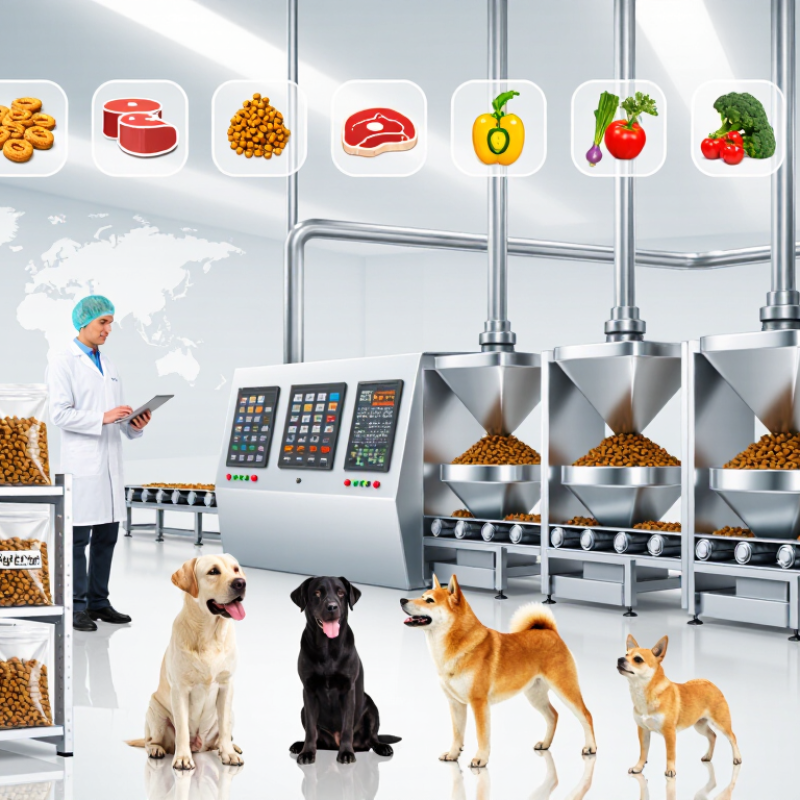
Private label dry dog food manufacturing is more than placing a logo on a bag. It combines recipe development, ingredient sourcing, extrusion, drying, testing, packaging, and distribution. According to the American Pet Products Association’s 2024 State of the Industry report, U.S. pet industry spending reached about $152 billion. That scale increases expectations for consistent nutrition and dependable supply.

Manufacturers usually begin with a nutritional target, such as maintenance, puppy growth, or weight management. Nutritionists then balance protein, fat, fiber, vitamins, and minerals. Ingredients may include poultry meal, grains, legumes, oils, and functional additives. During extrusion, heat and pressure shape the kibble and improve shelf stability. Quality teams test moisture, density, microbiological safety, and nutrient levels. Small details matter. A slightly uneven kibble size can affect feeding behavior and packaging accuracy.

FEDIAF’s 2024 Facts and Figures report approximately 139 million pet-owning households in Europe, showing the market’s broad demand. Private label projects also require packaging compliance, batch coding, traceability, and stability studies. Independent laboratory testing adds credibility, but it cannot correct a weak formula. The weak point is often communication between the buyer and factory. A clear product specification prevents costly changes. Still, even careful planning can miss palatability differences between dogs. Feeding trials and consumer feedback remain useful, imperfect evidence. Reliable manufacturers therefore document every production stage, retain samples, and review complaints instead of dismissing them.

How the Top Manufacturers Are Evaluated

Top 10 Private Label Dry Dog Food Manufacturers?

How the Top Manufacturers Are Evaluated

A credible evaluation begins with nutritional control, not attractive packaging. APPA’s 2024 State of the Industry report estimated U.S. pet spending at $150.6 billion. That scale increases pressure on private label manufacturers to deliver consistent quality. Each candidate should show complete formulations, qualified nutritionists, and documented ingredient specifications. Manufacturing sites should also follow recognized preventive-control systems. Independent laboratory testing should verify moisture, protein, fat, pathogens, and mycotoxins. Clear certificates of analysis matter.

Traceability separates capable suppliers from convenient suppliers. Auditors should review batch records, supplier approvals, allergen controls, and recall procedures. The FDA’s annual Reportable Food Registry demonstrates why fast product tracking remains essential across food categories. Production capacity also deserves attention. A supplier may offer low minimum order quantities, but unstable output can create costly shortages. Lead times, packaging accuracy, and warehouse conditions need practical verification.

Palatability testing adds useful evidence. Dogs may reject a technically compliant recipe. That detail is easy to underestimate. Buyers should request feeding-trial methods, acceptance rates, and complaint data where available. Grand View Research has projected continued growth in the global pet food market, but growth alone does not prove manufacturing excellence. No scorecard is perfect. I would weight safety and traceability above price, even when the cheaper proposal looks efficient. On-site audits remain valuable, although they cannot replace ongoing laboratory checks and honest supplier communication.

Profiles of the Top 10 Private Label Dry Dog Food Manufacturers

The leading private label dry dog food manufacturers differ in scale, testing depth, and production flexibility. One profile is a large facility with automated batching, metal detection, and high-volume extrusion lines. Another focuses on small production runs, helping emerging pet retailers test recipes without excessive inventory. A third specializes in grain-inclusive formulas, using visible ingredients such as oats, barley, and dried vegetables. One manufacturer develops sensitive-stomach recipes with limited protein sources and carefully measured fiber. Another stands out for senior-dog formulas, adding joint-support nutrients and smaller kibble shapes. These details matter during supplier evaluation.

The sixth profile emphasizes ingredient traceability, linking each lot to farms, processors, and laboratory records. A seventh offers veterinary nutrition consultation, though buyers should verify the consultant’s qualifications and actual involvement. The eighth operates flexible packaging lines for bags, cartons, and resealable formats. Another invests heavily in palatability testing, but taste results can vary between dog sizes and breeds. The tenth manufacturer provides transparent certificates of analysis and documented quality checks. I would still request recent test reports, facility-audit evidence, recall procedures, and production samples before signing an agreement. No supplier is flawless. Even strong manufacturers may miss a delivery window or need formula adjustments after feeding trials. Careful questions often reveal more than polished sales materials.

Top 10 Private Label Dry Dog Food Manufacturers? - Profiles of the Top 10 Private Label Dry Dog Food Manufacturers

Profile Primary Manufacturing Region Production Model Dry Food Formats Common Protein Options Recipe Development Typical Pack Sizes Quality and Compliance Frameworks Private Label Services Typical Minimum Order Range Typical Production Lead Time
Profile 01 United States Midwest Large-scale extrusion facility Standard kibble Small-breed kibble Puppy formulas Chicken, beef, lamb, turkey, fish Custom formulation and adaptation of established recipes 2 lb, 5 lb, 15 lb, 30 lb and 40 lb bags FDA animal-food requirements; FSMA preventive-controls practices; batch traceability Formula adjustment, packaging coordination, nutrition-panel support and lot coding Approximately 5,000–20,000 lb per recipe Approximately 8–14 weeks after artwork and formula approval
Profile 02 United States Southeast Mid-size contract extrusion plant Adult maintenance Limited-ingredient Grain-inclusive Chicken, salmon, pork, turkey and plant-based proteins Ingredient substitution, target-cost formulation and nutrient balancing 4 lb, 12 lb, 24 lb and 35 lb bags GMP-based production, supplier approval, finished-product testing and recall procedures Private packaging, barcode setup, pallet configuration and export documentation support Approximately 3,000–15,000 lb per recipe Approximately 6–12 weeks for repeat production
Profile 03 Canada Prairies Ingredient-focused dry pet-food facility High-protein kibble Puppy food Senior formulas Chicken, turkey, salmon, whitefish and beef Recipe development using poultry, fish and grain-based ingredient systems 3 lb, 6 lb, 15 lb and 25 lb bags Ingredient traceability, allergen controls, sanitation verification and laboratory testing Packaging artwork review, claims review, sample production and production scheduling Approximately 5,000–15,000 lb per recipe Approximately 8–16 weeks for new private-label programs
Profile 04 United Kingdom Automated extrusion and packing facility Standard kibble Small-breed recipes Functional diets Poultry, lamb, salmon, beef and insect protein European-style recipe development with controlled ingredient declarations 1.5 kg, 3 kg, 6 kg, 12 kg and 15 kg bags HACCP-based food-safety systems; BRCGS or equivalent site certification may apply UK and European label support, packaging sourcing, product sampling and batch documentation Approximately 2,000–10,000 kg per recipe Approximately 8–14 weeks after technical approval
Profile 05 Germany and Central Europe Specialty and premium dry-food producer Premium kibble Sensitive digestion Grain-free options Poultry, salmon, lamb, venison and alternative proteins Premium recipe positioning, ingredient screening and nutrient specification 1 kg, 2 kg, 5 kg, 10 kg and 15 kg bags HACCP, EU feed-hygiene requirements, supplier audits and routine microbiological testing Multilingual labels, product specification files, packaging development and export support Approximately 1,000–8,000 kg per recipe Approximately 10–18 weeks for new formulas
Profile 06 Spain and Southern Europe Flexible regional extrusion facility Adult dog food Economy formulas Functional kibble Chicken, beef, lamb, fish and mixed animal proteins Cost-targeted formulation, flavor development and nutrient adjustment 2 kg, 4 kg, 10 kg, 15 kg and 20 kg bags EU feed-safety controls, HACCP procedures, finished-product inspection and traceability Label translation, packaging formats, pallet planning and private-label logistics Approximately 3,000–12,000 kg per recipe Approximately 7–15 weeks depending on packaging availability
Profile 07 Thailand Export-oriented pet-food manufacturing plant Dry kibble Fish-based recipes Mixed-protein recipes Chicken, tuna, salmon, whitefish and poultry meals Export recipe customization, protein blending and target-price development 1 kg, 3 kg, 7 kg, 15 kg and 20 kg bags HACCP-based controls, export-market documentation, supplier qualification and lot traceability OEM packaging, container planning, export documents and product sample coordination Approximately 10,000–30,000 kg per recipe Approximately 10–20 weeks, excluding ocean freight
Profile 08 China Coastal Manufacturing Region High-volume OEM extrusion and packing facility Value kibble Premium kibble Custom shapes Chicken, beef, lamb, duck, fish and plant proteins Custom recipes, shape and size adjustment, and cost-based formulation 1 kg, 2.5 kg, 5 kg, 10 kg, 15 kg and 20 kg bags HACCP or GMP-based systems; destination-market documentation should be verified per facility Artwork preparation, customized kibble shapes, packaging procurement and shipment consolidation Approximately 10,000–50,000 kg per recipe Approximately 10–18 weeks, excluding international shipping
Profile 09 Australia Regional extrusion facility serving domestic and export markets Australian ingredient recipes Adult maintenance Sensitive formulas Chicken, lamb, beef, kangaroo and fish Ingredient-origin positioning, recipe customization and nutrient analysis 2 kg, 5 kg, 10 kg, 15 kg and 20 kg bags HACCP-based food-safety controls, ingredient traceability and export compliance review Private packaging, country-of-origin documentation, label review and freight coordination Approximately 5,000–20,000 kg per recipe Approximately 8–16 weeks depending on production capacity
Profile 10 Brazil Large-volume Latin American extrusion producer Economy kibble Adult formulas Puppy formulas Chicken, beef, pork, fish and poultry by-product meals Market-specific formulation, cost optimization and standard nutrient balancing 1 kg, 3 kg, 10 kg, 15 kg and 25 kg bags Local feed regulations, GMP-based production, batch controls and laboratory testing Portuguese and multilingual packaging, private-label artwork, palletization and export support Approximately 8,000–30,000 kg per recipe Approximately 8–18 weeks depending on formula and packaging
The profiles are anonymized by region and manufacturing type. Minimum orders, lead times, certifications and available formats vary by facility, recipe, packaging material and destination-market requirements; buyers should verify current specifications directly during supplier qualification.

Comparing Product Quality, Services, and Production Capabilities

Top 10 Private Label Dry Dog Food Manufacturers: Comparing Product Quality, Services, and Production Capabilities

A strong private label manufacturer begins with nutritional control, not attractive packaging. During supplier evaluations, I examine ingredient traceability, formulation records, and batch testing procedures. Reliable facilities test moisture, protein, fat, and microbial safety before shipment. They should also explain how they manage recalls and production deviations. Clear answers matter.

Production capability separates a promising supplier from a dependable one. I compare minimum order quantities, extrusion technology, drying accuracy, and packaging options. Flexible factories can produce different kibble sizes without creating excessive waste. Stable lead times are equally important for growing businesses. Small details count.

Service quality deserves equal attention. A responsive technical team can adjust recipes, review labels, and resolve quality concerns quickly. Manufacturers should provide documented specifications and realistic delivery schedules. Samples must match later production batches. That is often overlooked. My scoring can be imperfect because factory capacity changes with seasonal demand. I would therefore request recent audit records, production samples, and independent test results before making a final ranking. A lower-cost supplier may appear efficient, yet inconsistent texture or delayed communication can quietly increase expenses. The best candidates combine measurable product quality, practical customization, transparent service, and equipment suited to long-term volume.

How to Choose a Manufacturer for Your Dog Food Brand

Choosing a private-label dry dog food manufacturer requires more than comparing quoted prices. The American Pet Products Association reported US pet industry spending of $147 billion in 2023. Pet owners are spending carefully, but they still expect traceable ingredients and consistent nutrition.

Ask for evidence, not polished promises. Review facility certifications, supplier approval procedures, batch testing, recall records, and product specifications. A reliable manufacturer should explain protein sources, laboratory testing, moisture limits, and storage controls clearly. Check whether formulas meet recognized nutritional standards, such as AAFCO nutrient profiles. The FDA also expects animal food manufacturers to follow preventive controls under the Food Safety Modernization Act. Documentation matters.

Production flexibility deserves close attention. Compare minimum order quantities, lead times, packaging options, formula ownership, and change-control policies. Euromonitor’s pet care research continues to show strong demand for premium and functional pet food, yet premium claims need measurable support. Ask for digestibility data or substantiation for every health-related statement. A shiny package proves little.

The first shortlist is rarely right. A lower factory price may create higher testing, storage, or rework costs later. Request pilot samples and inspect kibble size, aroma, coating uniformity, and packaging seals. Include a written service-level agreement. It should define testing frequency, nonconforming batches, delivery delays, and communication duties. No checklist is perfect. Independent audits and periodic batch reviews still matter.

FAQS

What does private label dry dog food manufacturing involve?

It includes recipe development, ingredient sourcing, extrusion, drying, testing, packaging, and distribution. The logo is only one small part.

How is a dry dog food recipe developed?

Nutritionists set targets for maintenance, puppy growth, or weight management. They balance protein, fat, fiber, vitamins, and minerals. Ingredients may include poultry meal, grains, legumes, oils, and functional additives.

What happens during the extrusion process?

Heat and pressure shape the mixture into kibble. This process also improves shelf stability. Uneven pieces may affect feeding behavior and packaging accuracy.

Which quality tests are important?

Testing should cover moisture, density, nutrient levels, and microbiological safety. Laboratories may also check pathogens and mycotoxins. One test cannot prove everything.

Why are traceability and batch records necessary?

Batch records connect ingredients, production dates, packaging, and finished products. Traceability supports faster investigation when a problem appears. Retained samples provide useful evidence.

What should buyers examine before choosing a manufacturer?

Buyers should review complete formulations, ingredient specifications, supplier approvals, and preventive-control procedures. They should also check production capacity, lead times, warehouse conditions, and packaging accuracy. Cheap pricing can hide supply problems.

How can palatability be evaluated?

Feeding trials can measure acceptance rates and reveal whether dogs reject the recipe. Consumer complaints may show problems that laboratory testing misses. The evidence remains imperfect.

Why is communication between the buyer and factory important?

A clear specification reduces costly formula, packaging, and production changes. It should define ingredients, nutrient targets, kibble size, packaging, and testing requirements. Misunderstandings still happen.

Can independent laboratory testing guarantee product quality?

No. Laboratory testing verifies selected safety and nutrient measures. It cannot repair a weak formula or poor manufacturing process. Ongoing checks matter.

What makes a manufacturer dependable over time?

Dependable suppliers document each production stage and review complaints honestly. They maintain traceability, stable output, suitable storage, and consistent testing. No scorecard is perfect.

Conclusion

This article explores what private label dry dog food manufacturing involves, from recipe development and ingredient sourcing to processing, packaging, quality control, and fulfillment. It explains how a Private label dry dog food manufacturer supports emerging and established pet food brands by turning customized nutritional concepts into consistent, market-ready products. The discussion also outlines the key standards used to evaluate manufacturers, including production capacity, formulation expertise, safety procedures, testing, certifications, minimum order quantities, and communication.

The article profiles ten leading types of manufacturers without focusing on specific brand names, then compares their product quality, customization options, services, technology, scalability, and production capabilities. Finally, it provides practical guidance for choosing the right manufacturing partner based on target customers, dietary positioning, budget, packaging needs, launch timeline, and long-term growth plans. The goal is to help dog food entrepreneurs make informed decisions and build a reliable, high-quality product line.

Julian

Julian

Julian is a professional marketing specialist with a strong understanding of the company’s products, customers, and industry trends. With a practical, research-driven approach, he transforms complex product information into clear, useful content that helps readers make informed business decisions.......