EN
ISO 22000 · Made in the EU Direct factory supply of formulated kibbles, soft treats, and specialty formulas customized for brand owners, importers, and regional distributors.
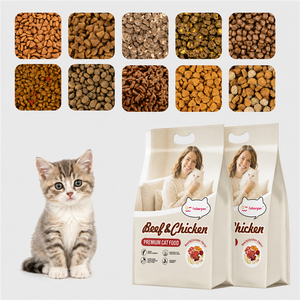
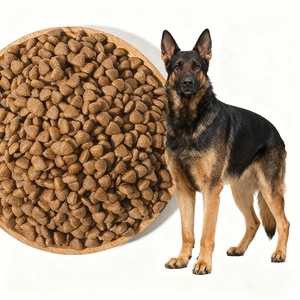
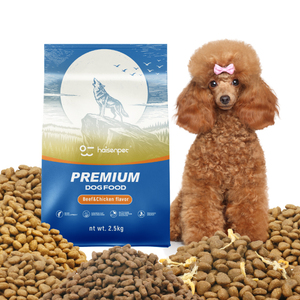
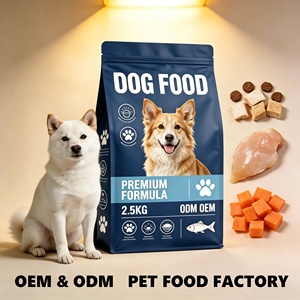
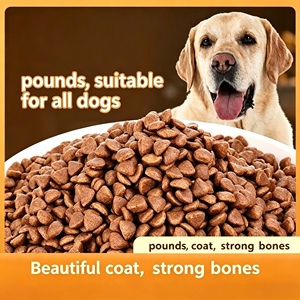
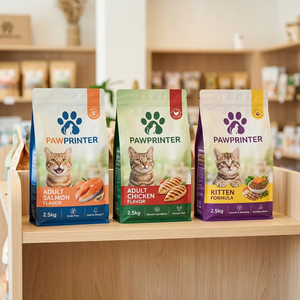
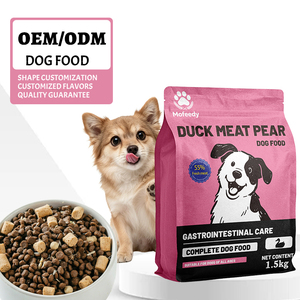
A rigorous industrial foundation engineered around safety, batch-to-batch consistency, and custom formulation adaptability.
Backed by over 30 years of dedicated extrusion science, our process engineers carefully tune screw speeds, moisture parameters, and thermal profiling to optimize starches, protect fragile micro-nutrients, and ensure optimal kibble density.
Our processing site strictly adheres to ISO 22000 Food Safety Management System frameworks. Every raw ingredient lot—from fresh protein meats to complex mineral premixes—undergoes thorough laboratory verification with complete forward-and-backward batch tracking.
Our team of feline nutrition experts leverages an extensive library of over 80 field-validated formulas. We adapt protein fractions, essential fatty acid ratios, and palatability enhancers to suit your brand’s regional market pricing and regulatory needs.
We empower rising pet food brands and established distributors alike by offering accessible entry minimum order quantities—starting as low as 5 tonnes for customized bags—enabling rapid market testing and lower inventory carrying costs.
Utilizing high-precision vacuum coaters, we inject fresh animal fats, digestion-enhancing hydrolysates, and natural palatants deep into the internal matrix of the kibble, boosting taste without leaving greasy outer residues.
Full support for international regulatory documentation, including health certificates, origin declarations, and label alignment in accordance with AAFCO guidelines, FEDIAF standards, and regional import protocols across 30+ export markets.
The global pet food sector is experiencing a monumental paradigm shift driven by humanization, premiumization, and advanced scientific formulation. Felines, as obligate carnivores, present distinct biological requirements that distinguish their manufacturing mechanics from canine diets. For global procurement directors, OEM brand managers, and B2B distributors, selecting the right contract manufacturing partner in China requires a comprehensive evaluation of processing architecture, raw material transparency, and structural supply chain resilience.
Cats lack specific metabolic pathways to synthesize critical nutrients from plant precursors. Consequently, contract manufacturing specifications must be strictly calibrated against feline physiological realities:
| Nutritional Metric | Standard Economy Kibble | Premium OEM Formulation | Super-Premium / Grain-Free Target |
|---|---|---|---|
| Crude Protein (Dry Matter) | 26% – 30% | 32% – 38% | 40% – 48%+ |
| Animal Protein Ratio | < 50% Total Protein | 70% – 85% Total Protein | 88% – 95%+ Total Protein |
| Crude Fat Content | 9% – 12% | 14% – 18% | 18% – 22% |
| Taurine Supplementation | 0.10% min | 0.15% – 0.20% min | 0.25% – 0.35% min |
| Acidification Control | Basic Ash Control | Targeted pH (6.2–6.5) | Active DL-Methionine pH Control |
| Processing Method | Single-Screw Extrusion | Twin-Screw Cooking | Twin-Screw + Freeze-Dried Raw Inclusions |
The core mechanical edge of a top-tier Chinese manufacturer lies in its thermal extrusion lines. Traditional single-screw systems often struggle with high-moisture fresh meat additions and high-fat formulations. Modern production facilities utilize twin-screw extruders featuring co-rotating intermeshing screws that offer superior mixing, precise shear rate control, and self-wiping capabilities.
Through closely regulated pre-conditioning chambers, steam and water are introduced into dry mix formulations, elevating thermal moisture levels to 25–28% before entering the extruder barrel. This pre-cooking step preserves raw ingredient quality, reduces mechanical shear damage to amino acids, and enables the seamless integration of up to 40% fresh meat slurries directly into the barrel. Subsequent vacuum drying and multi-stage fat coating ensure that delicate omega-3 and omega-6 fatty acids remain unoxidized and highly palatatable.
Distributors and brand owners looking to capture market share over the next decade must align their supply chains with several structural developments in the global pet nutrition market:
The market for raw-inspired diets continues to grow at over 12% CAGR globally. Contract manufacturing has evolved to meet this demand through hybrid production lines—combining high-protein extruded dry kibble with 5% to 20% freeze-dried raw meat cubes (such as chicken breast, liver, salmon, or egg yolk). This offers pet owners the convenience of kibble alongside the bio-availability and palatability of raw diets.
Modern consumers expect functional benefits beyond basic caloric intake. Leading OEM manufacturers now integrate thermo-stable spore-forming probiotic strains (e.g., Bacillus coagulans), micro-encapsulated postbiotics, specialized dietary fibers (FOS, MOS), and targeted joint care agents (glucosamine, chondroitin, green-lipped mussel powder) into post-extrusion cold-coating processes to preserve bio-activity.
Novel proteins are increasingly essential for managing food sensitivities and satisfying sustainable sourcing mandates. Highly digestible duck protein, hydrolyzed novel poultry proteins, hydrolyzed ocean fish, and sustainably cultivated insect meals (such as Hermetia illucens) are rapidly migrating from niche segments into mainstream private label portfolios.
With tightening environmental packaging regulations in Europe and North America, B2B procurement strategies are pivoting toward recyclable mono-material packaging structures (e.g., PE/PE laminates) and multi-layer oxygen-barrier aluminum-free foils that preserve product shelf life up to 18–24 months without structural degradation.
To mitigate supply chain risks when engaging a contract manufacturer in China, procurement teams should audit potential partners using the following operational metrics:
Clear, direct answers regarding custom formula development, ordering parameters, quality assurance, and global logistics.
Our flexible entry MOQ starts at 5 tonnes per recipe for standard dry kibble packed in printed paper or 3-layer laminate foil bags. For specialty treat pouches or freeze-dried hybrid lines, MOQ ranges from 5 to 8 tonnes. Mixed SKU pallet loads across shared recipe families are fully supported for initial market launches.
Our dedicated team of animal nutritionists and regulatory specialists formulates products strictly to meet or exceed AAFCO and FEDIAF nutrient profile benchmarks. We provide full official documentation, including COAs (Certificate of Analysis), Health Certificates, and Label Compliance Dossiers required by your local agricultural authority.
Yes. Reverse engineering competitor formulations is a routine part of our OEM/ODM R&D workflow. By analyzing a target sample's proximate analysis, kibble shape, density, and palatability profile, we develop equivalent or superior formulations customized to your target price point.
For first-time private label projects—including recipe approval, die-line creation, and custom film cylinder printing—lead time is typically 6 to 8 weeks. Repeat orders ship within 3 to 4 weeks from specification sign-off under a fixed replenishment schedule.
We support a comprehensive array of retail formats ranging from 300g stand-up zipper pouches to 1.5kg, 3kg, 7kg, 10kg, 15kg, and 20kg commercial bulk sacks in paper, PE/PE recyclable mono-material, and high-barrier foil laminates.
The production facility operates under an audited ISO 22000 Food Safety Management System, maintains HACCP compliance, holds government veterinary registration for international trade, and is certified for export to over 30 global markets.
Connect directly with our engineering and export desk to request technical specifications, preliminary pricing, or custom formulation samples.