Strategic Procurement Analysis: China Wholesale Rabbit Food & Small Animal Feeds
The global small pet market—encompassing lagomorphs (rabbits), rodents (guinea pigs, hamsters), and specialized exotic herbivores—has undergone a massive paradigm shift over the past decade. As pet humanization trends intensify across North America, Europe, and the Asia-Pacific region, commercial importers and private label brand owners are moving away from traditional, low-cost mixed-seed feeds toward science-backed, uniform extruded pellets and high-fiber Timothy grass-based formulations.
Sourcing directly from tier-one **China wholesale rabbit food factories** provides global distributors with an unassailable competitive advantage. China’s advanced agricultural processing hubs integrate direct farm access for premium forage crops (such as Sun-Cured Alfalfa and Premium Timothy Grass) with state-of-the-art twin-screw extrusion equipment. This combination enables precision control over crude fiber architecture, starch gelatinization, and thermal-labile nutrient retention.
Core Industry Insight: Preventing selective feeding in lagomorphs requires high-density extrusion where dietary fiber (NDF > 45%, ADF > 25%) is uniformly bound into every single pellet. Leading Chinese manufacturing partners leverage dual-stage conditioning to preserve thermolabile vitamins (Vitamin C, E, and B-complex) while guaranteeing optimal dental abrasion metrics.
The Physiological Imperative of Lagomorph Gut Microbiome Architecture
Rabbits are specialized hindgut fermenters. Their gastrointestinal health hinges on a delicate microbial balance within the cecum. Inadequate indigestible fiber results in cecal hypomotility, enterotoxemia, and fatal gastrointestinal stasis (GI Stasis). Consequently, international buyers must evaluate potential factory partners not merely on price per metric ton, but on their biochemical laboratory capabilities and precision formulation accuracy.
Modern commercial rabbit diets are divided into three primary functional categories:
Juvenile & Breeding Diets: Formulated with premium Medicago sativa (Alfalfa meal), yielding 16–18% crude protein and elevated bioavailable calcium for rapid skeletal development and lactation support.
Adult Maintenance Diets: Built on Phleum pratense (Timothy grass) bases, restricting crude protein to 12–14% and keeping crude fiber above 22–28% to prevent obesity and urinary calculi formation.
Functional Veterinary Diets: Infused with prebiotics (MOS & FOS), Yucca schidigera extracts for ammonia reduction, and encapsulated organic acids to suppress pathogens like Clostridium perfringens.
Enterprise Factory Capabilities: Standards of Quality & Process Control
Operating from our modern production facilities equipped with 30+ years of extrusion heritage, our contract manufacturing setup delivers rigorous food safety compliance. Every batch produced under our private label programs adheres strictly to **ISO 22000 Food Safety Management Systems**, EU Feed Hygiene Regulations (Regulation EC 183/2005), and US FDA feed export standards.
Raw Material Screening
Every intake lot of forage, cereal meal, and plant proteins undergoes near-infrared (NIR) spectroscopy and LC-MS testing for mycotoxins (Aflatoxin B1, Ochratoxin A, DON) and heavy metals before unloading into processing silos.
Precision Twin-Screw Extrusion
Advanced steam-preconditioning allows high-fiber inclusion (up to 35% raw forage pulp) without shear degradation, producing consistent 3mm–6mm pellets with optimal buoyancy, hardness, and zero dust fraction.
Agile Supply Chain & Low MOQs
We lower international market barrier-to-entry by providing flexible baseline orders starting from just **5 metric tonnes** per recipe family, accommodating multi-SKU container consolidation.
End-to-End OEM/ODM Customization Process
Partnering with an established Chinese contract manufacturer streamlines your supply chain workflow. From initial recipe ideation to container loading, our cross-functional team of animal nutritionists, packaging engineers, and regulatory specialists manages every milestone:
Specification & Benchmark Target: Importers provide target nutritional parameters (Crude Fiber, Protein, Fat, Calcium, Moisture) or benchmark market samples for reverse-engineering.
Formulation & Pilot Lab Sampling: In-house nutritionists formulate balanced recipes utilizing over 80+ validated ingredient modules. Laboratory pilot samples are dispatched within 10–14 days for physical testing.
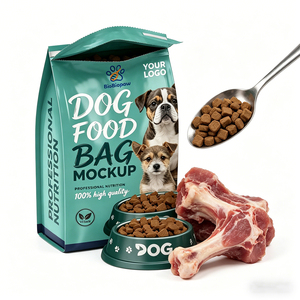
Packaging Engineering & Artwork Compliance: Custom multi-layer barrier bags (PET/AL/PE, Kraft paper with inner lining, foil pouches with zip locks) are engineered to prevent lipid oxidation and humidity absorption. Artwork is verified against destination country feed labeling laws.
Automated Batch Manufacturing: Production commences on automated extrusion lines monitored by real-time SCADA systems, ensuring zero cross-contamination.
Export Paperwork & Phytosanitary Clearance: Complete export documentation—including Health Certificates, Phytosanitary Certificates, Certificates of Analysis (COA), and Fumigation Certificates—is generated for seamless customs clearance.
To assist procurement managers and brand architects in formulating commercial product specs, the following matrix outlines the industry-standard analytical profile across primary small animal product lines.
As competition intensifies in global e-commerce and retail channels, commercial buyers must align with manufacturers adopting next-generation production innovations:
1. Grain-Free & Starch-Restricted Formulations
High starch content from traditional wheat and corn fillers triggers cecal dysbiosis in small herbivores. Modern Chinese factories are utilizing specialized binder technology based on cold-water soluble natural gums, lignosulfonates, and pea fiber. This allows 100% grain-free pelletization without sacrificing mechanical pellet durability index (PDI > 98%).
2. Inclusion of Botanical & Functional Nutraceuticals
The integration of natural phytogenic feed additives is replacing prophylactic antibiotic reliance. Key additions gaining rapid market traction include:
Yucca Schidigera Extract: Saponins bind fecal ammonia, significantly diminishing hutch and indoor living area odors.
Oregano Essential Oils & Thymol: Natural antimicrobial properties that stabilize cecal flora against pathogenic E. coli strains.
Stabilized L-Ascorbyl-2-Polyphosphate: Thermally stable Vitamin C necessary for guinea pigs to prevent scorbutic complications during long shelf-life storage.
International regulations are driving the adoption of recyclable mono-material barrier laminates (such as PP/PE structures) and biodegradable Kraft papers. Chinese OEM suppliers are at the forefront of this transition, offering certified recyclable packaging options that preserve nitrogen-flushed product freshness while supporting brand sustainability goals.
Frequently Asked Questions (FAQ) for Global Importers
Here are explicit answers to key commercial, technical, and regulatory questions encountered by buyers sourcing from China wholesale pet food factories.
What is the baseline minimum order quantity (MOQ) for custom private label rabbit food?
Our standard factory MOQ starts at 5 metric tonnes per recipe family for paper sacks or multi-layer barrier bags, and 8 metric tonnes for custom-printed high-barrier foil pouches. Importers can combine multiple SKU bag sizes (e.g., 1kg, 3kg, and 10kg) within a single production run, keeping initial capital investment manageable for new market launches.
How do Chinese factories ensure Timothy grass purity and prevent mycotoxin contamination?
Leading suppliers source forage directly from contracted high-altitude growing bases with climate-controlled sun-curing protocols. Raw forage is tested upon arrival via High-Performance Liquid Chromatography (HPLC) for mycotoxins (Aflatoxin, Zearalenone, T-2 Toxin), heavy metals, and pesticide residues. Raw materials failing strict threshold limits are rejected before entering processing streams.
Can your factory duplicate or reverse-engineer an existing competitor formula?
Yes. Our R&D laboratory offers complete reverse-engineering services. By sending a physical benchmark sample along with its guaranteed analytical statement, our nutritionists analyze raw material composition, particle size distribution, and nutritional profiles to formulate an exact match or enhanced alternative at a competitive Ex-Works or FOB price point.
What legal certifications are provided for international customs clearance?
Our production facilities operate under ISO 22000, HACCP, and ISO 9001 certified quality systems. Every export shipment is accompanied by official documentation issued by China Customs (GACC), including Official Veterinary Health Certificates, Phytosanitary Certificates, Certificates of Origin (Form E, CO, RCEP), and comprehensive Batch Certificates of Analysis (COA).
What is the standard production and shipping lead time for bulk orders?
For repeat orders on established formulas, standard production lead time is 3 to 4 weeks. For new private label projects—which include custom cylinder engraving, film printing, artwork approval, and initial lab testing—the typical lead time is 6 to 8 weeks from signed specifications. Emergency rush manufacturing schedules can be arranged upon commercial request.
How is long-distance ocean transport shelf-life guaranteed for high-fiber diets?
Pellets are extruded to precise residual moisture levels (≤ 9.5%), preventing fungal sporylation. Packaging lines incorporate active nitrogen gas flushing and desiccants to remove oxygen inside retail bags, eliminating lipid oxidation and maintaining aroma and palatability for 18 to 24 months under ambient storage conditions.
Launch Your Private Label Rabbit Food Line Today
Partner with China’s premier extrusion facility. Request our full 2026 product catalog, analytical dossiers, or an immediate factory-direct FOB/CIF price quote.