EN
ISO 22000 · Made in the EU Explore our industrial-scale OEM manufacturing capabilities across agricultural food processing, specialty ingredients, and hyper-premium pet nutrition.
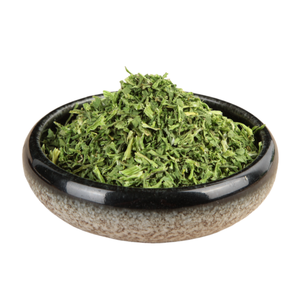
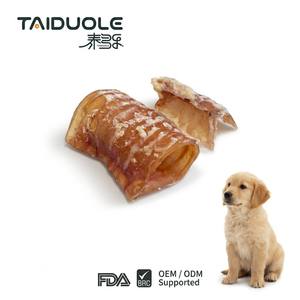
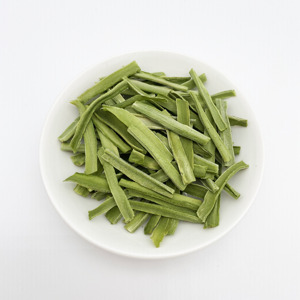
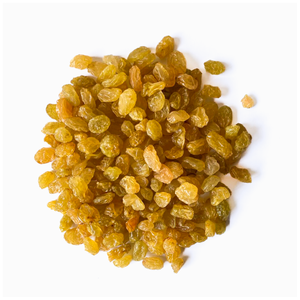
In modern industrial food processing and ingredient extraction, ambient dehydration and controlled air drying (AD) have emerged as the gold standard for preserving thermal-sensitive bioactive compounds, cellular structure, volatile aromatic oils, and natural color profiles. Unlike aggressive high-temperature thermal rendering or expensive freeze-drying (FD) cycles, optimized continuous hot-air continuous tunnel drying strikes an ideal equilibrium between bio-availability preservation and commercial unit economics.
As a premier Custom OEM Air Dried Manufacturer & Exporter operating under rigorous ISO 22000 food safety management systems, our facility integrates multi-stage psychrometric environmental controls. By regulating air velocity, relative humidity (RH), and temperature gradients across distinct drying zones, we prevent the phenomenon known as "case hardening"—where the outer surface of a moisture-rich raw material seals prematurely, trapping internal water activity ($a_w$) and creating conditions susceptible to microbial proliferation.
Understanding the operational parameters of air drying compared to alternative moisture-reduction technologies is crucial for brand owners, B2B importers, and commercial procurement directors:
| Drying Methodology | Process Temperature Range | Final Water Activity ($a_w$) | Nutrient & Enzyme Retention | Rehydration Ratio / Texture | Commercial Cost Efficiency |
|---|---|---|---|---|---|
| Controlled Air Drying (AD) | 45°C – 75°C (Low Temp Zone) | 0.30 – 0.55 $a_w$ | 85% – 94% Retention | High density, elastic chew texture | Optimal / High Scalability |
| Freeze Drying (FD) | -40°C Sublimation Vacuum | 0.15 – 0.25 $a_w$ | 95% – 98% Retention | Porous, brittle, ultra-fast absorbency | High Energy Input / Premium Cost |
| Direct Thermal Kiln Rendering | 90°C – 140°C (High Heat) | 0.40 – 0.65 $a_w$ | 40% – 60% Retention | Rigid, high thermal degradation | Low Cost / Low Nutrient Yield |
Built upon over three decades of contract extrusion, dehydration, and packaging experience in European and Asian manufacturing hubs.
Full batch traceability from raw material silo intake to final sealed stretch-wrapped pallets. Every production run undergoes rigorous pathogen clearance including Salmonella, Listeria, and enterobacteriaceae testing.
We eliminate high barriers to market entry by offering scalable starting MOQs from 5 tonnes for bulk ingredient runs and 8 tonnes for complex multi-layer retail pouch packaging.
Deep expertise navigating EU Feed Regulation 767/2009, 183/2005, USDA import permits, and customs clearance protocols for over 30 countries across North America, Europe, the Middle East, and Asia-Pacific.
As consumer demand shifts toward transparent labeling, minimal synthetic processing, and sustainable sourcing, commercial buyers must align their procurement strategies with four macro shifts in dehydration technology:
Our custom OEM lines cover four distinct industrial categories, each tailored to stringent technical parameters:
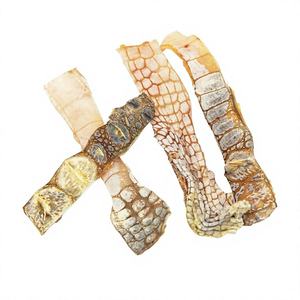
Utilizing low-temperature air drying (45°C–55°C), we dehydrate raw animal cartilage, collagen structures, and novel hides without damaging essential amino acids. Air-dried crocodile skin and beef trachea deliver natural dental scaling action while providing bioavailability for native chondroitin and glucosamine.
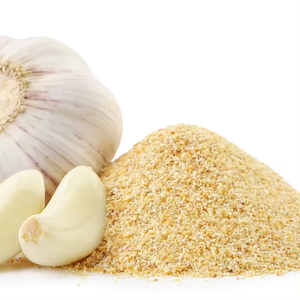
From Air Dried Garlic Granules (16-26 Mesh) to Natural Green Parsley AD Flakes, our agricultural drying lines leverage optical sorting, magnet separation, and precise moisture monitoring to achieve stable 8% maximum moisture levels while protecting volatile essential oils like allicin and apiol.
Direct responses to common inquiries regarding OEM custom contracts, minimum order parameters, quality compliance, and logistics delivery terms.
Our standard production MOQ starts at 5 metric tonnes for bulk multi-wall paper and 3-layer laminated barrier sacks. For pre-formed retail foil snack pouches (e.g., zipper pouches for pet treats or dehydrated ingredients), the MOQ is 8 metric tonnes per artwork run. SKU variations within the same recipe family can be combined to meet container volume thresholds.
Pathogen eradication is achieved via a validated multi-stage lethality step that combines controlled thermal exposure with precise relative humidity management. This process achieves a minimum 5-log reduction in Salmonella and Listeria monocytogenes without cooking or degrading the underlying protein structure, followed by immediate post-dry ambient cooling in cleanroom conditions.
Yes. Our industrial milling, granulation, and sifting equipment allows us to customize particle sizes from fine powders (80-100 mesh) to standardized granules (such as 16-26 mesh garlic) and custom-cut flakes (1-3 mm or 3-5 mm green parsley). Every batch includes a sieve analysis certificate.
Every commercial export shipment includes a comprehensive technical documentation pack: Certificate of Analysis (COA), Phytosanitary Certificate (for agricultural goods), Veterinary Health Certificate (for animal protein exports), ISO 22000 Audit Records, Batch Traceability Manifest, and Packing List/Bill of Lading tailored to destination customs rules.
For existing product specifications and repeat orders, standard manufacturing lead time is 3 to 4 weeks. For new custom OEM/ODM projects requiring custom recipe formulation, artwork proofing, film printing cylinder creation, and trial batch testing, initial lead times range from 6 to 8 weeks.
Consult directly with our senior process engineers and export sales team. We provide rapid feasibility assessments, custom price benchmarking, and sample dispatch within 48 business hours.