EN
ISO 22000 · Made in the EU Explore our export-ready OEM/ODM pet food series, engineered to European nutritional standards (FEDIAF/AAFCO) with premium meat inclusions, high digestibility, and market-tailored shelf presentation.
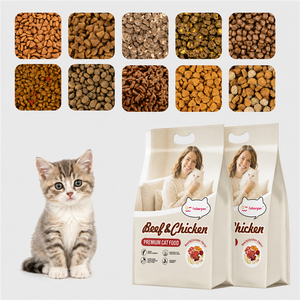
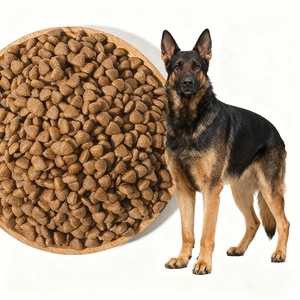
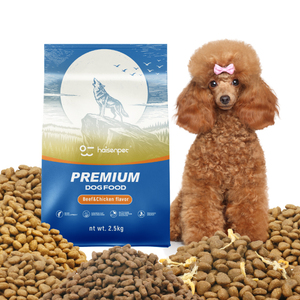
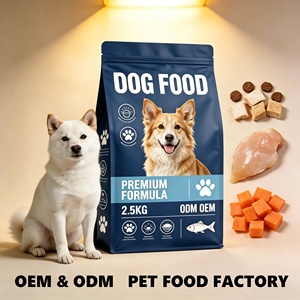

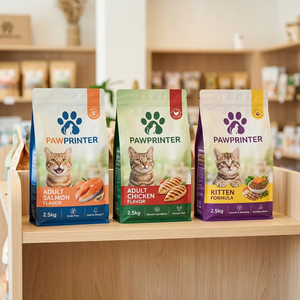
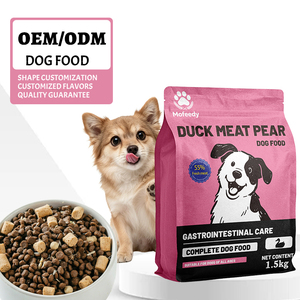
The global pet care market is undergoing a structural paradigm shift. Pet humanisation, combined with advanced feline and canine dietary science, has propelled wet pet food, functional gravies, ultra-premium loafs, and tailored nutritional kibbles from luxury niche offerings into core retail volume drivers. Brand owners, regional distributors, and retail chains face a landscape where consumers scrutinise ingredient decks, bio-availability, moisture levels, and manufacturing origin with unprecedented rigor.
As an established European Union contract manufacturer with over three decades of operational engineering—operating from our modern facility in Csévharaszt, Hungary (Pamax Kft., established 1993)—we deliver high-gain manufacturing intelligence and turnkey OEM/ODM production solutions. Whether formulating high-moisture canned pâtés, retort pouch wet recipes, or specialized high-protein kibbles, our facility unites thermal processing control with rigorous European feed law compliance.
Success in contract pet food manufacturing hinges on three technical pillars: precise lethality value ($F_0$) thermal processing, enzymatic stabilization of fresh animal proteins, and exact hydrocolloid binding to maintain structural integrity under retail transport conditions.
Producing commercial wet food and high-moisture pet diets requires overcoming complex biochemical challenges. Unlike dry kibble processing, which relies on high-temperature short-time (HTST) twin-screw extrusion to achieve carbohydrate gelatinisation, wet pet food contract manufacturing centres around hermetic sealing and thermal retort sterilisation.
To achieve commercial sterility without degrading vital amino acids, heat-sensitive vitamins (such as Thiamine/B1 and Taurine), and natural palatability, thermal processing parameters must be meticulously optimized. Retort pressure vessels must reach target lethality values ($F_0 \ge 3.0$ minutes, typically targeted between 8.0 and 12.0 for maximum safety margins) to eradicate spore-forming anaerobic pathogens such as Clostridium botulinum.
Our process engineering team utilizes real-time wireless data-logging probes within pouch cores and tin centers to calculate exact heat penetration curves ($f_h$ values). This prevents thermal over-processing, preserving meat texture, natural juices, and micronutrient integrity while guaranteeing a 24-to-36-month ambient shelf life.
Whether formulating a smooth loaf (pâté), tender chunks in jelly, or tender cuts in savoury gravy, the hydrocolloid matrix dictates visual appeal, mouthfeel, and moisture stability over time. Syneresis—the unwanted separation of water from the gel matrix—is a leading cause of consumer rejection in premium wet food lines.
We deploy tailored clean-label hydrocolloid blends based on target product attributes:
A comparative structural analysis for OEM/ODM brand managers evaluating format selection for market entry.
| Format Vector | Aluminum / Steel Cans | Multi-Layer Retort Pouches | Aluminum Thermoformed Tubs |
|---|---|---|---|
| Barrier Level | 100% O2 & Light Barrier (Absolute) | High Barrier (EVOH / Alumina Coated) | High Barrier Peelable Foil Lid |
| Thermal Transfer Rate | Moderate (Conduction/Convection) | Rapid (Thin Profile, Higher $F_0$ Efficiency) | Fast (Shallow Depth Profile) |
| Logistical Efficiency | High Tare Weight, Fixed Volume | 90% Lower Tare Weight, Flat Storage | Stackable Empty, Medium Weight |
| Consumer Convenience | Pull-Tab Ring, Requires Spoon | Easy-Tear Notch, Single-Serve Portion | Peel-Off Lid, Serve-In-Tub |
| Typical Net Weights | 85g, 156g, 400g, 800g | 70g, 85g, 100g, 300g | 100g, 150g, 300g |
| Standard Shelf Life | 36 Months Ambient | 24 Months Ambient | 24 Months Ambient |
Navigating the next decade of pet food commercialisation requires aligning formulation design with overarching market macro-trends. The convergence of veterinary science and consumer lifestyle choices is redefining global shelf dynamics.
Feline biological evolutionary traits mean cats possess a low thirst drive, predisposing domestic populations to Chronic Kidney Disease (CKD) and Lower Urinary Tract Diseases (FLUTD). Modern OEM formulations prioritize high-moisture diets (78%–84% moisture) fortified with urinary acidifiers (DL-Methionine), controlled phosphorus levels, and isotonic broth bases to maximize voluntary fluid intake.
Adverse Food Reactions (AFRs) in dogs and cats are driving rapid demand for novel, limited-ingredient diets (LID). Procurement strategies are shifting away from mixed poultry meals toward single-source muscle meats including duck, venison, wild boar, rabbit, and hydrolysed salmon proteins, mitigating dermatological and gastrointestinal sensitivity triggers.
Driven by EU Green Deal directives and extended producer responsibility (EPR) legislation, brand owners are transitioning away from complex aluminum-laminated films toward recyclable polypropylene-based monomaterial retort pouches that withstand 121°C processing without compromising oxygen transmission rates (OTR).
Procurement directors navigating global market volatility must look beyond initial ex-works pricing. Sustainable competitive advantage requires evaluating contract manufacturing partners across four critical supply chain vectors:
Entering new international markets with unproven SKUs carries inventory carrying cost risks. Traditional multi-national co-packers often demand 20-tonne minimums per single recipe. Forward-thinking procurement strategies leverage regional EU facilities capable of flexible batch runs (starting from 5 tonnes for dry kibble and 8 tonnes for specialized pouch formats), allowing agile market testing and rapid SKU iteration.
Modern pet owners increasingly practice mixed feeding—combining dry kibble with complementary wet pouches or gravies as food toppers. Partnering with a comprehensive manufacturer capable of formulating matching nutritional profiles and aroma vectors across both dry kibble lines and wet/treat product portfolios ensures brand sensory consistency across retail touchpoints.
With stringent global veterinary customs checks (USDA, EFSA, GACC), full backward traceability from final retail unit to raw material slaughterhouses is non-negotiable. Modern contract facilities must maintain ISO 22000 and HACCP certifications with fully audited supply chains sourcing Category 3 animal by-products suitable for human consumption.
Combining 30+ years of Hungarian manufacturing heritage with state-of-the-art extrusion, retorting, and private label execution.
Access our proprietary library of over 80 pre-validated complete and complementary formulas. Our in-house animal nutritionists adapt protein ratios, kibble geometries, gravy viscosities, and functional premixes to meet your specific target price point and nutritional claims within 2 to 3 weeks.
Our Csévharaszt production site operates under strict ISO 22000 Food Safety Management protocols. Every incoming shipment of fresh meat, dry meal, and micronutrient premix undergoes immediate laboratory analysis before entering processing, ensuring 100% batch-to-batch consistency and complete legal compliance with EU Regulation 767/2009.
We streamline international trade. From managing custom-printed film rolls, block-bottom paper bags, and multi-layer retort pouches to generating veterinary health certificates, EUR.1 documents, and customs clearance paperwork, our export desk serves over 30 countries across Europe, the Middle East, and Asia.
Direct technical answers to common questions asked by B2B buyers, importers, and brand owners prior to contract execution.
Our baseline MOQ starts at 5 tonnes per recipe for dry extruded kibble packaged in multi-wall paper or 3-layer laminate bags. For specialized soft treats, pillow snacks, and wet food pouch formats, standard production runs start at 8 tonnes. Mixed pallet options across SKUs sharing a common recipe base are available to support initial commercial rollouts.
Yes. Our laboratory team frequently performs analytical reverse-engineering on benchmark market samples. By reviewing your target product's chemical composition (crude protein, fat, ash, fiber, moisture), amino acid profile, and kibble/pouch texture, we can reconstruct a mathematically optimized recipe tailored to your exact target cost of goods sold (COGS).
Our facility in Csévharaszt, Hungary, is officially registered with the European Union veterinary authority for intra-community trade and third-country export. We operate under an ISO 22000 Food Safety Management System and prepare all label declarations, analytical constituent guarantees, and feed additive listings in full compliance with EU Regulation 767/2009 and Regulation 183/2005.
For repeat orders on established formulas, standard production and pallet loading are completed within 3 to 4 weeks. For new private label developments—including artwork approval, cylinder/plate production, initial sample sign-off, and raw material quarantine testing—the lead time typically ranges from 6 to 8 weeks.
Absolutly. We regularly integrate functional nutraceuticals including Glucosamine, Chondroitin Sulfate, Omega-3 (EPA/DHA) marine oils, Prebiotics (FOS/MOS), Yucca Schidigera extract for odor control, and natural antioxidants (tocopherols) into our formulations to support specific health claims (Joint Care, Hairball Control, Skin & Coat).
You may provide your own artwork using our precise dieline templates, or our packaging specialists can guide film selection. Every single artwork iteration undergoes a mandatory regulatory review by our legal compliance department to guarantee that all ingredient names, legal category declarations, and feeding tables strictly adhere to regional target market standards.