EN
ISO 22000 · Made in the EU Explore our factory-direct, high-protein kibble formulations engineered for export markets, private label brands, and customized nutritional specifications.
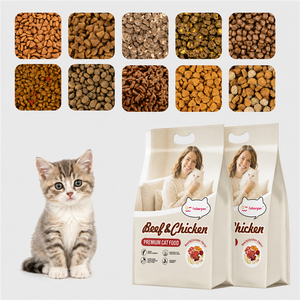
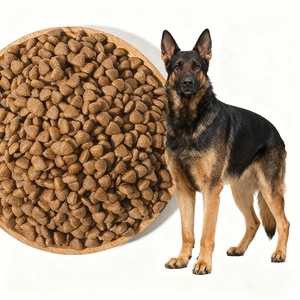
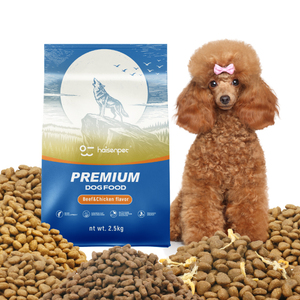
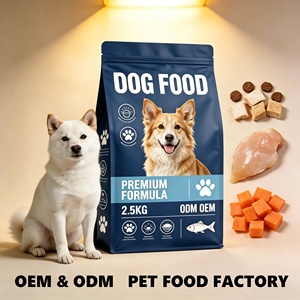
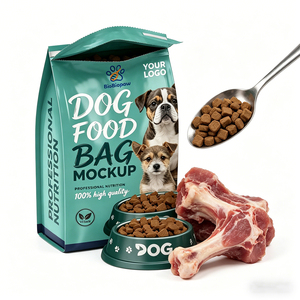
Advanced bio-available protein matrices, glucosamine-fortified kibbles, and targeted caloric density designed specifically for aging canine and feline physiology.
Strict alignment with EU Regulation 767/2009 and 183/2005 feed hygiene standards, supported by full veterinary export documentation for 30+ international markets.
State-of-the-art twin-screw extrusion technology capable of producing customized kibble geometries (4 mm to 20 mm) with vacuum fat coating integration.
The global pet care ecosystem is undergoing a structural transition driven by pet humanization, longevity extension, and specialized nutritional science. As companion animals live longer, the demand for targeted senior dog food and geriatric feline nutrition has surged past standard maintenance feeds. Sourcing partners and brand owners searching for a Top 10 Senior Food Manufacturer & Factory require more than simple co-packing capacity; they demand precise technological capability, recipe flexibility, raw material traceability, and regulatory authority.
Extruded dry pet food manufacturing is a complex discipline combining thermal processing, shear stress control, structural starch gelatinization, and liquid fat absorption. Senior pets present unique metabolic parameters: decreased renal efficiency, joint cartilage degradation, altered gut microflora, and reduced masticatory force. Manufacturing dry kibbles for senior animals requires fine-tuning kibble density, fracture force, kibble geometry, and bio-available protein inclusion.
This industry whitepaper provides operational benchmarking, procurement trends, formulation science, and compliance guidelines to assist importers, distributors, retail group buyers, and private label brand directors in evaluating enterprise-level pet food factories.
When evaluating long-term contractual manufacturing agreements, procurement teams must analyze macro trends shaping consumer behavior and regulatory frameworks over the next decade. Sourcing strategy can no longer rely on single-commodity recipes; modern factories must accommodate rapid product pivots.
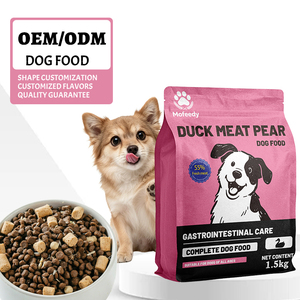
Food intolerances and cutaneous adverse food reactions (CAFR) are increasingly diagnosed in aging dogs and cats. Factory lines must support monoprotein processing—such as single-source Duck, Salmon, or Lamb—with total wash-down protocols between production shifts to prevent cross-contamination. Formulations featuring complementary functional ingredients, such as Duck and Pear combinations, effectively reduce tear staining and manage localized skin inflammation.
Environmental sustainability and novel protein exploration have elevated high-protein vegan dog foods from a niche alternative to a mainstream commercial category. Achieving a complete amino acid profile (including L-carnitine, taurine, DL-methionine, and lysine) solely through plant matrices requires sophisticated micro-ingredient dosing systems during pre-extrusion mixing. Premium plant-based kibbles targeting 22.5%+ crude protein leverage concentrated pea, potato, and rice protein isolates alongside balanced Omega-3 and Omega-6 fatty acid profiles.
Thermally sensitive ingredients—such as live probiotics, heat-labile vitamins, digestive enzymes, and specific joint-support compounds (chondroitin sulfate, hyaluronic acid)—degrade rapidly inside high-temperature extruders (typically operating between 110°C and 140°C). Top-tier senior food factories utilize post-extrusion vacuum coating systems (PVS). PVS technology draws liquid fats, enzymatic palatants, and delicate bio-actives deep into the core matrix of the cooled kibble under reduced pressure, preserving thermal integrity and boosting palatability.
The following technical matrix outlines standard operational target parameters comparing senior pet food production standards against standard adult maintenance specifications:
| Nutritional & Physical Parameter | Senior Dog / Cat Target | Standard Adult Maintenance | Manufacturing Precision Control Method |
|---|---|---|---|
| Crude Protein Digestibility | ≥ 88% (Highly Hydrolyzed) | ≥ 80% Standard Protein | In-house NIR Spectroscopy & Pepsin Assays |
| Crude Fat Content | 8.0% - 12.0% (Controlled Caloric Density) | 12.0% - 18.0% Standard Fat | Vacuum Coating & Liquid Dosing Pumps |
| Kibble Hardness (Fracture Force) | 12 - 18 N (Soft-Bite Matrix) | 25 - 35 N Standard Density | Texture Analyzer / Mechanical Compression Test |
| Functional Joint Additives | Glucosamine (>500 mg/kg), Chondroitin | Optional / Trace Amounts | Micro-Dosing Premix Systems |
| Starch Gelatinization Rate | ≥ 92% (Optimized Digestion) | ≥ 85% Standard Gelatinization | Differential Scanning Calorimetry (DSC) |
| Moisture Content Target | 8.0% - 9.5% Max | 9.0% - 10.0% Max | Continuous Fluidized-Bed Dryer Control |
With over three decades of extrusion operations established in Hungary (European Union) since 1993, our manufacturing complex serves as an benchmark contract facility for global brands, importers, and retail groups. Sourcing direct from an established EU plant provides structural supply chain security, regulatory transparency, and unmatched product quality.
Food safety is non-negotiable in global pet food distribution. Our production site operates under a fully certified ISO 22000 Food Safety Management System, incorporating systematic Hazard Analysis Critical Control Point (HACCP) principles at every operational node. From raw cereal silo intake to final automated robot palletizing, every production lot undergoes rigorous laboratory testing for heavy metals, mycotoxins (aflatoxin, zearalenone), microbiological safety (Salmonella, Enterobacteriaceae), and analytical constituent compliance.
Traditional multi-national pet food conglomerates often enforce prohibitive Minimum Order Quantities (MOQs) exceeding 20 to 50 tonnes per single stock keeping unit (SKU), stifling brand innovation and regional market testing. Our operational structure provides an agile 5-tonne MOQ threshold per recipe family for standard paper and multi-layer packaging, enabling regional distributors and scaling private labels to launch specialized SKUs without excessive working capital lockup.
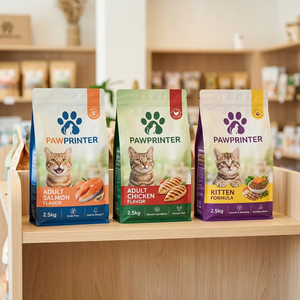
Packaging serves as the primary barrier against lipid oxidation, moisture gain, and aroma degradation. Our facility integrates automated bag-filling lines capable of handling a broad spectrum of commercial packaging formats:
Direct technical responses addressing common procurement, manufacturing, and regulatory inquiries from international trade buyers.